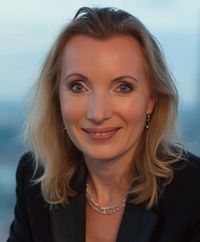
This website is currently only operated PRIVATELY.

Long Covid / ME/CFS and chronic diseases: Knowledge transfer can build bridges - e il mondo cambierá - and the world will change
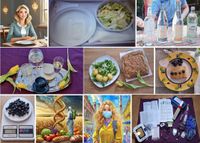
The Challenge of a Turning Point – A Personal and Scientific Reflection
The Day Everything Changed
Suddenly, it was there — Day X, and nothing worked anymore. My life, which I had built with great passion and structure, was completely turned upside down.
As a strategic consultant for communication and marketing, my work was much more than just a profession; it was an expression of my personality, my lived passion, and my dedication. With great care and commitment, I had founded my company, “MehrLot Digital” and established it as a brand. But suddenly, nothing was possible anymore.
A wave of severe health problems struck me with unexpected force:
- Severe Chronic Fatigue Syndrome (CFS) and Multiple Chemical Sensitivity (MCS)
- Visual disturbances, sudden and unexpected fainting spells, sleep disorders, and dizziness—leading to falls, bruises, and injuries
- Extreme inflammatory processes and an increase in allergies
- Orthostatic hypotension with cardiovascular complications
- Severely altered gut microbiome and breathing difficulties
- Tinnitus, speech disorders, and severe anaphylaxis
- Drug intolerances, some with life-threatening side effects
- Angioedema and rheumatic flare-ups
In 2022, I had to make the difficult decision to completely give up my self-employment. I sold my beloved motorcycle and stored away my bicycle and hiking gear. But I kept my camera, canvas, painting set, and favorite books within reach — reminders of my creativity and imagination. They remained an open door through which I would one day return.
Survival Strategies and My Path Back to Strength
For a long period, I had to focus on the immediate survival challenges. Even baking a tolerable gluten-free bread became a major obstacle because all familiar ingredients had suddenly become completely intolerable.
With countless failed baking attempts a mixture of rice flour, water, and cream of tartar, as no other ingredients were tolerable an exhausting phase began. A simple bread seemed impossible with only these three ingredients.
But my body benefited from the mental and emotional foundations I had built throughout my life:
- Mental strength and discipline
- A firm belief in healing and progress
- Survival instinct and patience
Today, I have become a true “water expert”, consciously drinking from various vessels, a water glass, espresso cup, wine glass, champagne flute, to give myself the feeling of fully participating in life.
Turning Challenges into Opportunities – Scientific Engagement Despite Illness
I refused to be defeated and began analyzing my challenges from a strategic perspective. In 2024, I wrote a marketing thesis on “Personalized Medicine as a Societal Responsibility” at the German Academy of Management, and I also earned a diploma in Disaster Management from the Vienna Business Academy.
Despite my chronic health burdens, I completed both degrees with excellence.
Data That Drives My Motivation
The statistics speak for themselves and fuel my determination to find solutions:
- 400 million people worldwide are struggling with the long-term effects of Long COVID and ME/CFS with projections of over 1 billion affected individuals by 2033.
- 528.4 billion USD annually was attributed to illnesses and deaths due to non-optimized drug therapy in the U.S. in 2016 alone.
- The worldwide increase in neurological diseases (Alzheimer’s, dementia, migraines, strokes) has dramatic effects on emergency and crisis management, over 3.4 billion people suffered from nervous system diseases in 2021.
- The silent diabetes crisis, with 529 million affected globally, of which 96% suffer from largely preventable Type 2 diabetes.
- The increasing nearsightedness (myopia) epidemic among children is expected to exceed 740 million cases by 2050, impacting disaster preparedness and emergency response.
These developments clearly show that our societies worldwide are far from resilient. Hundreds of millions live with chronic conditions, yet our crisis management systems remain unprepared for this reality.
The “University of Hope” – An Interdisciplinary Concept for Global Resilience
From months of reflection and strategic planning, my University of Hope was born an initiative for developing new approaches, scenarios, and strategies for:
- Firefighters, emergency and crisis managers
- Police, military and rescue forces
- Chronically ill individuals (Long COVID, ME/CFS, MCS and many others)
- Healthcare professionals and critical infrastructure workers
- Societal resilience and awareness
Key questions I explored: What about first responders and frontline workers? How should emergency plans and preparations be adapted for those with chronic illnesses? How can checklists be adjusted to accommodate these overwhelming new challenges? How should AR training scenarios be developed for chronically ill emergency personnel? What role do environmental chemicals play in exacerbating health conditions? What about Pharmacogenomics (PGx) in disaster response?
Finding solutions, creating new strategies, and implementing real changes, that is my mission.
Addressing Critical Factors in Emergency Strategies
Many affected individuals suffer from:
- Loss of smell
- Muscle weakness and vision problems
- Severe light and noise sensitivity
- Orthostatic hypotension and drug intolerances
These are aspects that must be urgently integrated into emergency response frameworks.
My passion for strategy development, communication, crisis management, environmental studies, and pharmacology led me to explore the works of Medical Medium (Anthony William), whose findings have impacted millions worldwide.
Additionally, for over 14 months, I have been an active member of the PK Forum led by Professor Eric Chan at the Department of Pharmacy and Pharmaceutical Sciences, National University of Singapore. There, I contribute my own scientific analyses and case studies to the research community.
Furthermore, I am a member of the International Social Capital Association Incorporated, because in my view, a resilient society is impossible without a functioning social capital system, and I deeply appreciate the association’s work.
Knowledge Is the Key to Resilience and Innovation
My personal story is far more than just an illness narrative it is proof that knowledge and scientific engagement pave the way to strength, resilience, and innovation.
- Resilience emerges from interdisciplinary collaboration
- Crisis management must be tailored to both individual and societal needs
- Scientific networking enables sustainable solutions for global health crises
Through my University of Hope and my own interdisciplinary research, I strive to make a decisive contribution to a more resilient future.
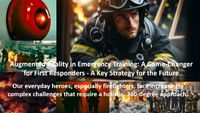
Sharing knowledge and making it globally accessible
Yes, my life path changed fundamentally in 2022, as I was unexpectedly torn from my own hard-built business.
So I chose new paths that are currently feasible and sustainable for me.
As a member of the IEEE GRSS Disaster Management & Early Warning Study/Working Group as well as the GRSS Biohazard & Vector EO Group, I contribute my strategic expertise to the development of conflict- and crisis-sensitive frameworks – including the Conflict-Sensitive Geospatial Framework (CSGF), the BioHazard-Fusion Matrix and much more. Special thanks also go to Ing. Hassan Abouseada, Chair of the IEEE GRSS Disaster Management Study/Working Group and Director of Frequency Coordination at the Egyptian Space Agency (EgSA), and to Dr. Siri Jodha Singh Khalsa (Senior Research Scientist Emeritus at the National Snow and Ice Data Center (NSIDC)), for the trusting and wonderful teamwork.
At the same time, I am using the Geo-Resilience Framework to build a global architecture in which my specially developed GeoResilience Compass will locate key concepts in order to make a further contribution to global resilience.
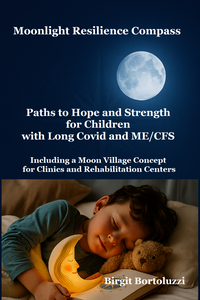
Newly published
E-book “Moonlight Resilience Compass - Paths to Hope and Strength for Children with Long Covid and ME/CFS (including a Moon Village Concept for Clinics and Rehabilitation Centers” (November 2025)
The e-book is available in English and German.
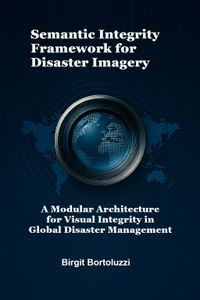
My current e-book “Semantic Integrity Framework for Disaster Imagery – A Modular Architecture for Visual Integrity in Global Disaster Management” is also available there in three languages (English, German, and Italian).
I am currently writing my new e-book “AI Friends? Protecting Children from Digital Attachment to AI”, which operationalizes ethical, semantic, and visual protection mechanisms for children in AI-supported communication. At its core are the Adaptive Control Units (ACUs) – modular control components that can detect, visualize, and regulate emotional proximity. The emotional attachment of children to AI systems is not a marginal phenomenon – it is an underestimated risk factor in global disaster protection. Artificial intelligence is an integral part of modern communication and interaction systems – especially in crisis and disaster situations, where children often first come into contact with digital interfaces. The goal is not to marginalize AI systems and their role, but to develop viable, ethically robust concepts that also protect children in their emotional and semantic vulnerability.
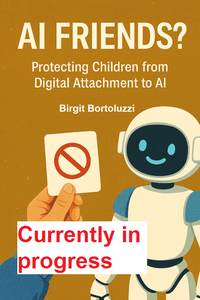
In global disaster and emergency situations, AI systems are often the first accessible communication interface for children – particularly when human assistance is delayed or overwhelmed. Without controllable proximity mechanisms and semantic protection protocols, these systems can create emotional dependency that hinders real help and undermines the resilience of vulnerable groups. That is why we need new approaches to ensure that AI does not become a risk, but a resilient partner in protecting the most vulnerable.
This architecture is directly compatible with the “Semantic Integrity Framework for Disaster Imagery” for semantic safety and global resilience.
I also dedicate great attention to this topic and am working on concepts and new strategic approaches such as “Embodied Resilience: A Strategic Framework for Firefighter Leadership and Adaptive Operational Readiness” and “Resilience Structures in the Context of Global Zoonotic Threats (Application of EO/GEDI)”.
Another Milestone on My Journey – Research, Recognition, and Gratitude
“Security is not a state but a process. Every step, every idea, and every collaboration shapes the future.”
It is with gratitude and joy that I look back on having been given the opportunity to present my innovative strategic concepts and scenarios at the Pracademic Emergency Management and Homeland Security Summit 2025, organized by Embry-Riddle University Worldwide College of Arts & Sciences / Department of Emergency, Disaster and Global Security Studies.
I am grateful, inspired and deeply honored to have been a speaker at this global summit, where I addressed my lifelong passion "When your life is on the line, optimized and comprehensive training, as well as the development of holistic 360-degree approaches, is everything." Well-Prepared for Emergencies – A balance between high-tech innovation and human care.
This summit was a remarkable gathering of experts, including scientists, educators, emergency and security managers and policymakers from 27 countries, all driven by a shared, positive goal - To make our world safer and to actively shape the future of emergency and disaster management through collaborative solutions.
This two-day global conference united us in developing groundbreaking solutions for crisis response, disaster resilience, and homeland security.
Gratitude for the Journey That Is Far From Over
I look upon all that I have achieved with deep pride, but the road ahead is still long and I will continue with unwavering determination.
Above all, I am profoundly grateful to have walked this challenging and demanding path together with my beloved husband Cesare, who has always been by my side and has demonstrated immense strength in my most difficult moments.
From anaphylactic reactions and severe episodes to emergency breathing exercises and critical medical situations, we have overcome countless challenges together. Many obstacles still remain, but we continue this journey with courage.
Thank you, Tesoro!
I also extend my heartfelt gratitude to my dear friends Mario, Heiko, Tina, Katrin, Peter, Petra, Alex, Markus and Pierre, as well as to our wonderful Sister Sigharda in Würzburg, who has become like family to me over the past four years.
A special thanks to Professor Eric, whose deep expertise and profound kindness I hold in high regard. I also wish to thank my Worldwide Friends Shivendra, Yang, Abubakar, Samrat and Bob, as well as the Finnish professor who selflessly analyzed my MRI scans, since I still lack access to medical supervision.
Acknowledging Those Who Have Made a Difference
I am incredibly grateful to:
- My dedicated and compassionate dentist and her powerhouse team, who go to great lengths to ensure my safety
- Anthony William, whose books guided me in developing tailored strategies that significantly improved my symptoms
- Our Italian butcher Carlo
- Master baker Martin, who worked with me tirelessly to create a bread I could tolerate
- Our priest Michael, as well as my tutors at the German Academy for Management and the Vienna Business Academy, along with their always supportive student advisory team
- And of course, all others who have watched over me and ensured that I was not exposed to unnecessary dangers
- My deep and unwavering faith, which has carried me through all my challenges
A Special Thanks to My Furry Friends
I also extend my loving gratitude to our animal companions:
- Gastone, the dog of our neighbors
- Speedy and his mouse family
- Our garden hedgehog Charlie
They have brought joy and laughter to my toughest moments, when my strength was not enough to lift me off the couch or out of bed.
Each and every one of you has been, and continues to be, an essential part of my survival ecosystem and for that, I am endlessly grateful.
Conviction, Challenges and the Courage to Walk My Own Path
There are those who may mock me for wearing a mask, but that does not bother me. No one except me truly understands what it means to have no tolerable medications, to fight for every meal, and to endure countless sacrifices.
If you are wondering why I do not simply take Cromoglicic acid, Ranitidine, Fexofenadine, Aspirin, Heparin, Pantoprazole, Simvastatin, Lidocaine, Tranexamic acid, PPIs, NSAIDs, Aciclovir, Amoxicillin, Paracetamol, Morphine, Procaine or Metamizole, the answer is simple: I have already experienced severe and, in some cases, life-threatening adverse drug reactions to these medications.
Thus, my path does not rely on conventional solutions, but rather on perseverance, scientific research and individually tailored strategies.
I sincerely wish you all the very best and may you stay as healthy as possible.
Pace e Bene!
Birgit